Grundlegende Akkorde wie „Do-Mi-So“ und „Re-Fa-La“ zu kennen, wird Ihnen helfen, Jazz zu improvisieren!
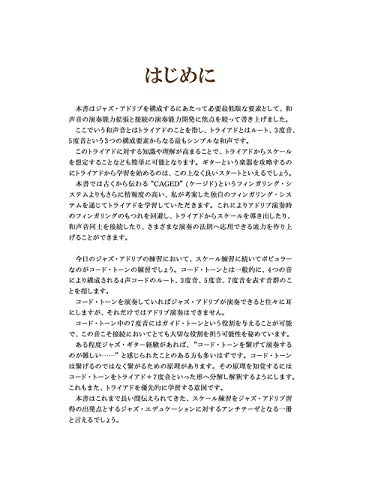
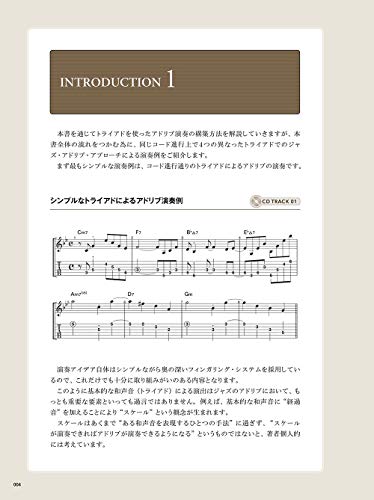
Ein Akkord, der aus drei Tönen besteht, wie z. B. „Do-Mi-So“ und „Re-Fa-La“, wird als „Dreiklang“ bezeichnet und hat einen Akkordnamen: """Do-Mi-So"" wird zu C und ""Re-Fa-La"" wird zu Dm""". Im Jazz wird oft angenommen, dass man nicht improvisieren kann, ohne zahlreiche Tonleitern und komplexe Akkorde zu kennen, was den Einstieg in den Jazz schwierig macht.. Improvisation muss jedoch nicht ausschließlich auf Tonleitern basieren. Ein gründliches Verständnis von Dreiklängen ermöglicht es Ihnen, durch deren Kombination frei Improvisationen zu gestalten.
Dieses Buch verwendet die Klassifizierung des Autors von horizontalen und vertikalen Dreiklangsformen, um auch Anfängern zu helfen, einen logischen Ansatz zur Jazzimprovisation zu entwickeln.
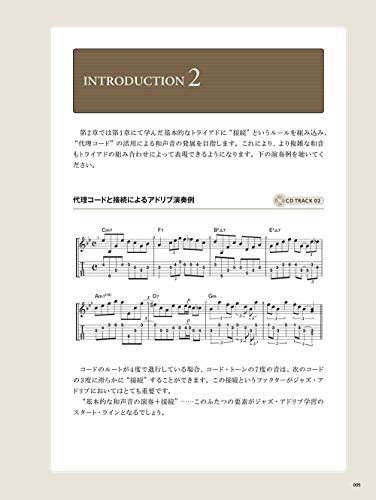
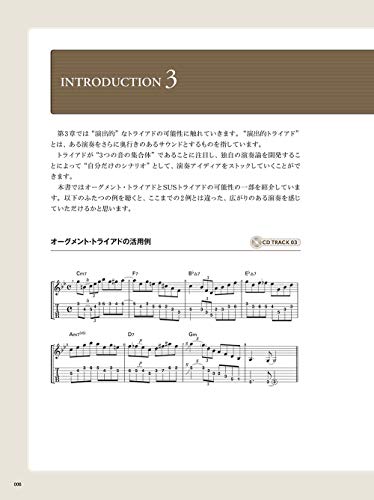
Die komplexen Klänge des modernen Jazz können durch Dreiklangkombinationen ausgedrückt werden, daher behandelt dieses Buch eine breite Palette von Jazzstilen, von traditionellem Bebop bis hin zu zeitgenössischem.
Dieses Buch wird für diejenigen empfohlen, die mit der Jazz-Improvisation beginnen möchten, sowie für diejenigen, die neue Methoden in ihre Improvisation integrieren möchten!
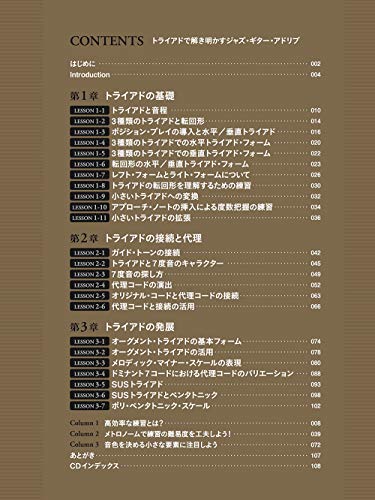
[Inhalt]
Kapitel 1: Grundlagen der Triade
1-1 Dreiklänge und Intervalle
1-2 Drei Arten von Dreiklängen und Umkehrungen
1-3 Einführung in das Positionsspiel und horizontale/vertikale Dreiklänge
1-4 Horizontale Dreiklangsformen mit drei Arten von Dreiklängen
1-5 Vertikale Dreiklangsformen mit drei Arten von Dreiklängen
1-6 Horizontale/Vertikale Dreiklangsformen mit Umkehrungen
1-7 Über linke und rechte Formen
1-8 Übungen zum Verständnis von Dreiklangsumkehrungen
1-9 Umwandlung in kleine Dreiklänge
1-10 Übungen zum Verständnis von Tonarten durch Einfügen von Annäherungstönen
1-11 Erweiterung kleiner Dreiklänge
Kapitel 2: Dreiklangverbindungen und Substitutionen
2-1 Leittöne verbinden
2-2 Dreiklänge und der Charakter der Septime
2-3 Wie man die Siebte findet
2-4 Alternative Akkorde erstellen
2-5 Verbinden von Originalakkorden und alternativen Akkorden
2-6 Verwendung alternativer Akkordideen
Kapitel 3: Dreiklänge entwickeln
3-1 Grundlegende erweiterte Dreiklangsform
3-2 Erweiterte Dreiklänge verwenden
3-3 Melodische Moll-Tonleitern ausdrücken
3-4 Alternative Akkordvariationen auf Dominantseptakkorden
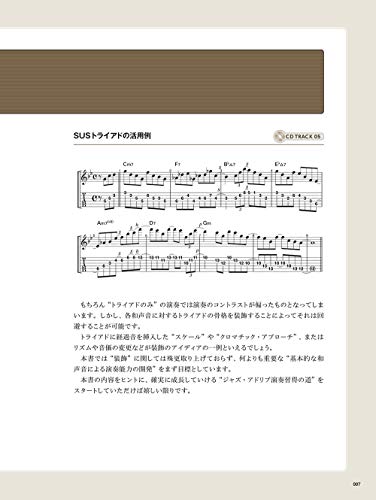
3-5 SUS Triade
3-6 SUS Dur-Dreiklang und Pentatonik
3-7 Poly-Pentatonische Skala




 Rückerstattung bei Nichtlieferung

![Basic Basics Einführung in die Jazzgitarre [DVD enthalten]](https://img.joomcdn.net/ca1068b9aea1b840982aa0925469a92d935c8318_86_100.jpeg)
![Anfängereinführung in die Jazzgitarre mit großem Text und Noten [CD enthalten]](https://img.joomcdn.net/86a0304b5eeda26da16a6468e44d2d0246c8b68e_74_100.jpeg)


![Sie können es so verwenden, wie es ist. Die ultimativen Phrasen für das Gitarrentraining – Ausgabe zur Jazzimprovisation – [Videokompatible Version]](https://img.joomcdn.net/7ea16b2a35bcbd2ce3316a646f0bccbd5a238822_70_100.jpeg)


![Einfach zu spielen mit TAB-Noten für alle Lieder Eine Auswahl klassischer Gitarrenmeisterwerke, die Sie bewundert haben [mit Referenz-Performance-CD]](https://img.joomcdn.net/7b50a2666990c5c8a47afddf3597757128d4831a_74_100.jpeg)



![[Videokompatible Version] Einführung in die Akustikgitarre mit großem Text und Noten](https://img.joomcdn.net/75d36e22a5d3e0d584d362d0eff484f4bbc743e6_74_100.jpeg)
![(CD und DVD enthalten) Klassische Gitarrennoten Encore Edition [Neu überarbeitete Ausgabe] (Akustikgitarren-Magazin)](https://img.joomcdn.net/a11b0b71b601b37ce1170652090cf441072c3faf_74_100.jpeg)
![Können Sie die Referenzperformance „Meijin Suehara Presents Southern All Stars“ mit Sologitarre [Sie online] anhören! ]](https://img.joomcdn.net/45319ca3320a4b645687be88fecaacbc444260c5_74_100.jpeg)


