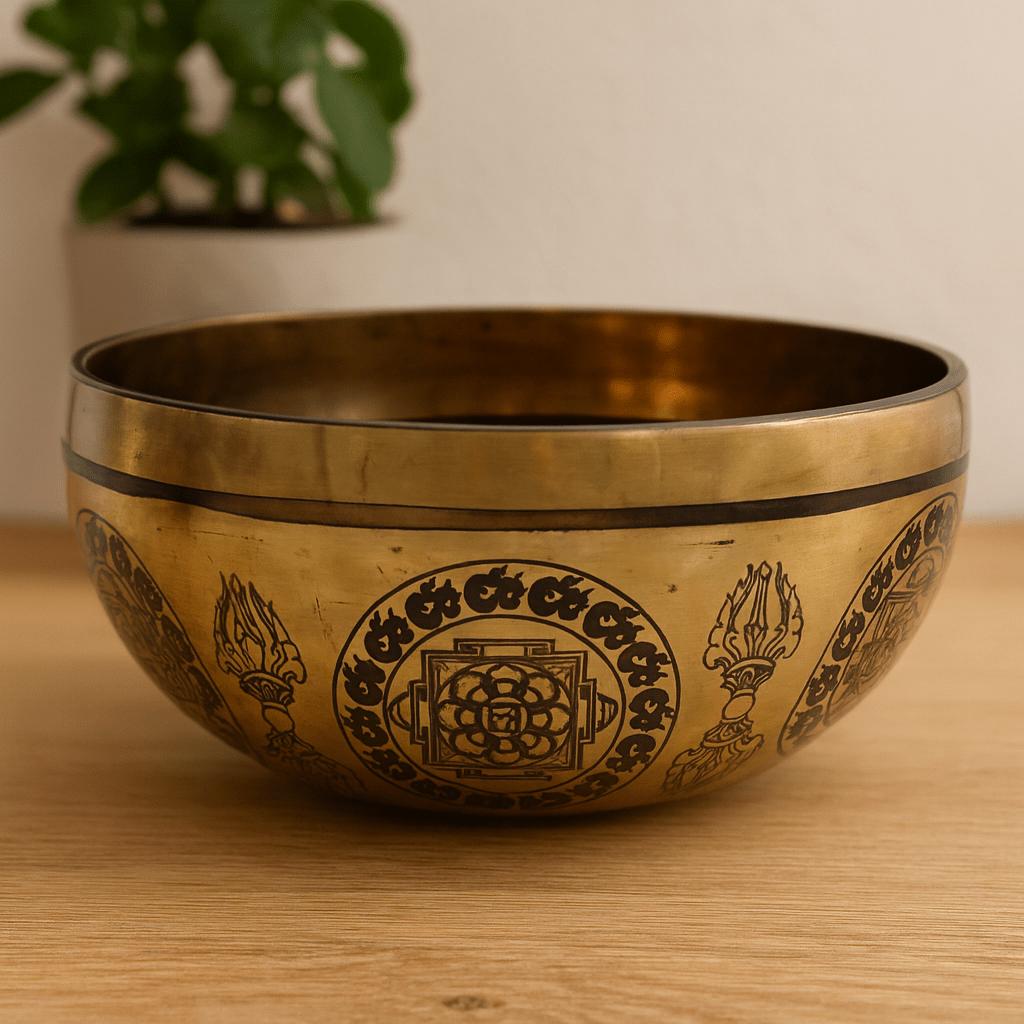
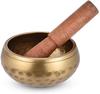
Set down before a quiet sitting, this engraved metal Tibetan singing bowl has the kind of presence that slows the room before a note is played. Its weighted form invites both hands, while the Five Buddhas motif gives the surface a contemplative focus for meditation, sound practice or a still corner at home.
What the bowl brings to a room
A steady, grounded feel when held, suited to a slower ritual rather than a quick decorative gesture.
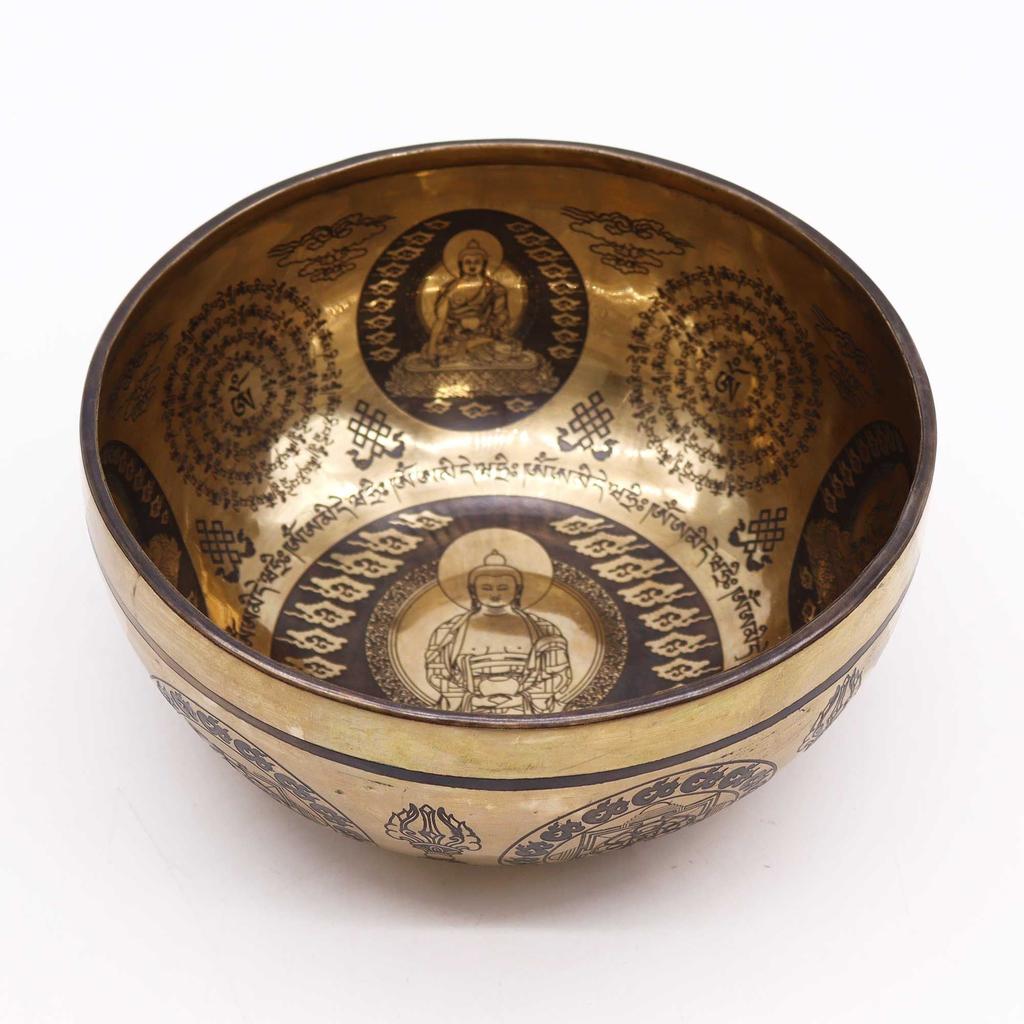
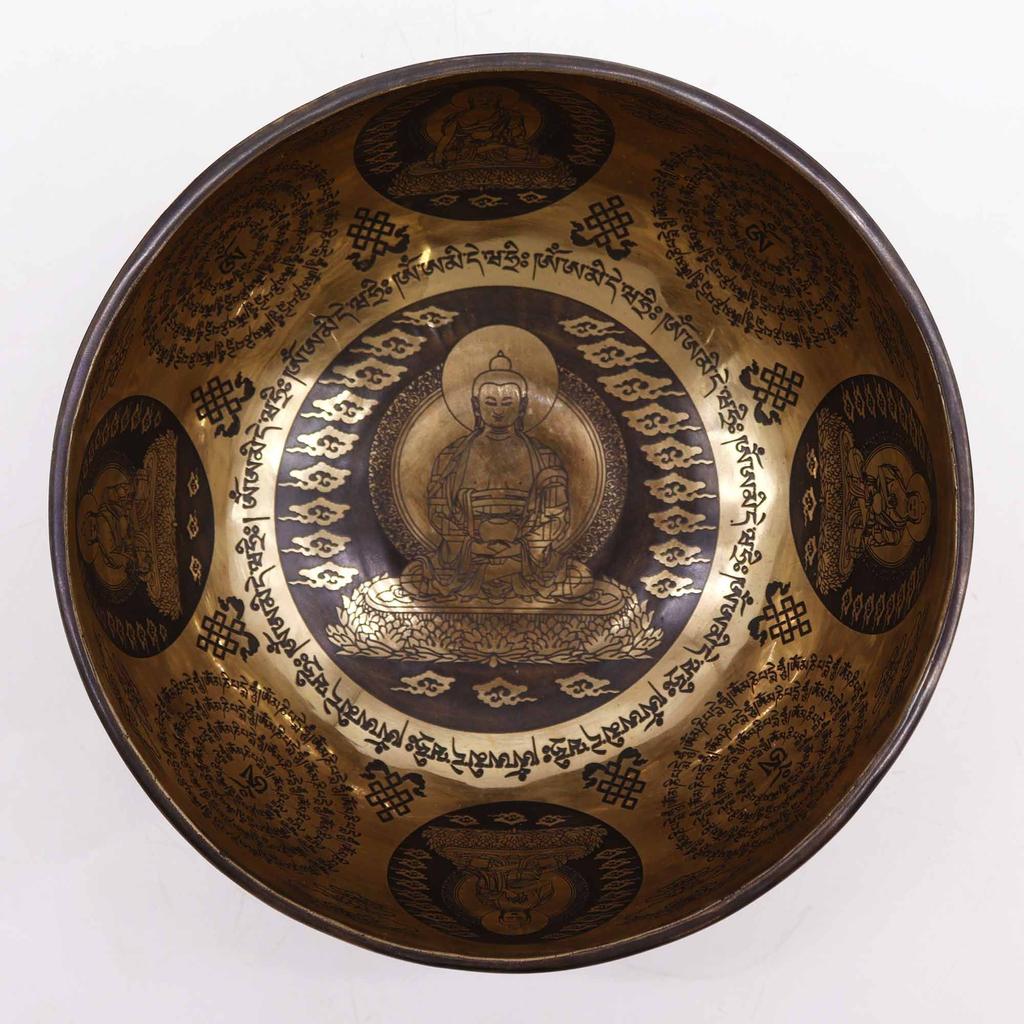
Engraved Buddha imagery across the bowl, offering a point of focus before, during or after playing.
A sculptural presence on a low table, altar space or meditation shelf, where the metal catches soft light.
A sound object for marking the beginning of a sitting, closing a yoga practice or bringing attention back to the room.
A tactile surface that encourages careful handling, with the bowl felt as much as seen.
Metalwork from Nepal
The bowl is handcrafted in Nepal from brass, copper bronze, iron and silver. Its engraved surface reflects the Tibetan style, with the Five Buddhas represented as part of the decorative and symbolic design.
Playing it with patience
Use it as a struck bowl, tapping the rim gently with a suitable singing bowl striker, or practise the singing technique by circling the outer rim with slow, even pressure. The tone comes from friction setting the metal into vibration, so rim-playing usually improves with a steady hand and a little patience.
Keeping the metal at its best
Handle the bowl with clean, dry hands and rest it on a stable surface between uses. Wipe with a soft dry cloth after handling, and keep it away from prolonged damp so the metal finish stays clear and cared for.
The Five Buddhas in context
In Tibetan Buddhist iconography, the Five Buddhas, often called the Five Dhyani Buddhas, are associated with awakened qualities such as wisdom and compassion. Bowls carrying this imagery are used today as meditation instruments, ritual objects and contemplative pieces, especially by those …
region of manufacture: Nepal



 Geld zurück bei Nichtlieferung




![Tibetische Klangschale, klein, 14 cm [AmanaMana Official], Reinigung, Heilung, Obertonmeditation, Professional Association zertifiziert](https://img.joomcdn.net/8059bb36233b428b46803dc303817164fce2296b_100_100.jpeg)
![Tibetische Klangschale Klangschale GrundschuleMittelschule 18cm [Amana Mana Official] Reinigung Heilung Oberton Meditation ProfessionalAssociation](https://img.joomcdn.net/489aedb3e7d46653d663f7af14faccc714388ef5_100_100.jpeg)
![Tibetische Klangschale, 18 cm, Amana-zertifiziert (Professional Association), (Klein / Mittel) [Offizielles Mana], Reinigung, Heilung, Harmonisierung, Meditation](https://img.joomcdn.net/2440ce3dded0b2b3669e3bdd249261ba5d34186c_100_100.jpeg)


![Klangschale Tibetische Klangschale Klein 14cm Reinigung Meditation Yoga Einführung Für Anfänger bis Profis [AmanaMana Offiziell]](https://img.joomcdn.net/5c3dd61faa741be656bd4ea4165572602088a587_100_100.jpeg)