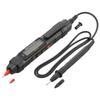
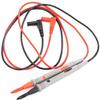
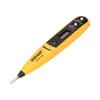
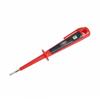
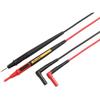
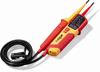
VOLTAGE AND CONTINUITY TESTER 0.5-1000V AC, CAT IV - WH 45217
Specifications:
Voltage and continuity tester 0.5 – 1000V AC, CAT IV
Catalog number 45217
Battery type (IEC designation) 2x AAA batteries
Voltage V AC min. – max. 0.5 - 1000
Voltage V DC min. – max. 0.5 - 1500
Pollution level 2
Contactless voltage control Yes
ATEX certification No
Suitable for photovoltaics Yes
Suitable for electromobility No
Built-in flashlight Yes
FI control Yes
LCD LED display
IP protection class IP64
LED rotating field indication L, R
Continuity test LED and acoustic signal
Operating temperature min - max (°C) -15 - 50
Storage temperature min (°C) -20 °C
Altitude above sea level 2000 m
Electrical Phase Test min - max (V AC) 100 - 700
Rotating Field Test 170 - 7000 V phase to phase AC 40-70 Hz
Continuity Test Measuring Range 0 - 500 kΩ + 50%
LED indication ELV > 50 V AC, > 120 V DC
LCD range 0.5 V - 1.000 V AC, 0.5 V - 1.500 V DC
LCD resolution 0.1 V ( 10 V)
LCD accuracy +/- 3%, +/- 3 digits ( 10 V)
LCD overflow indication OL
Operating time (s) Emergency current (mA) Is Measurement mode 30 s on (operating time), 240 s off (recovery time)
Battery consumption (mA) 80 mA
Humidity RH max (%) 85 %
Signal Acoustic Yes
Total length (?) 282
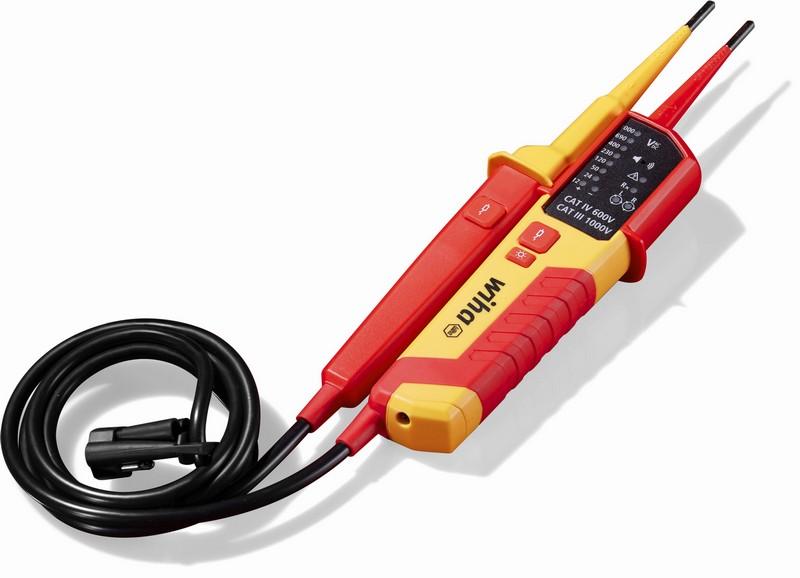
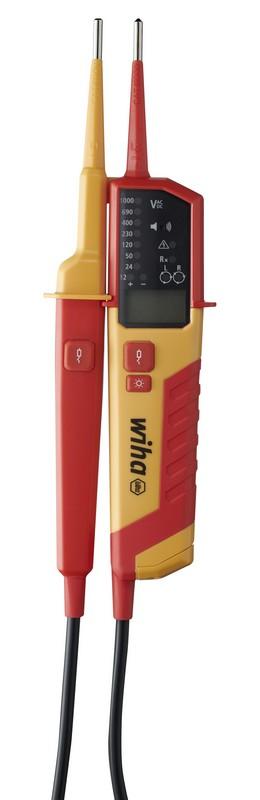
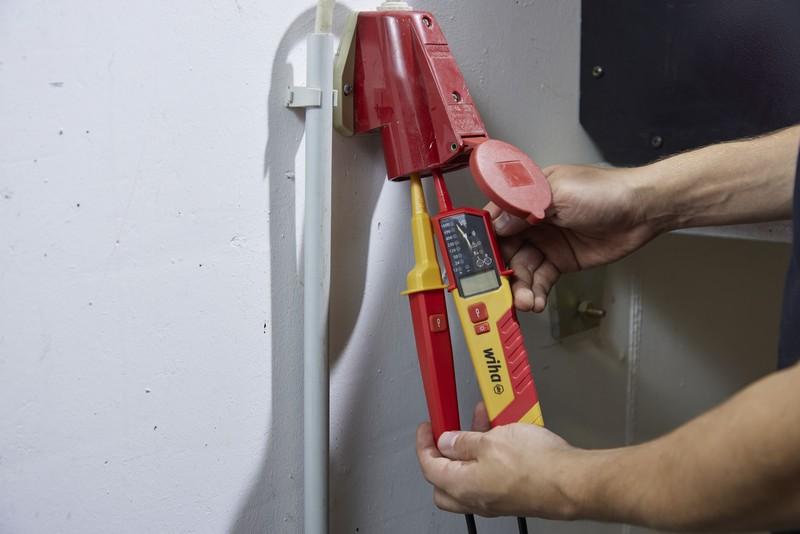
Allows you to perform resistance and frequency measurements. Thanks to the large, digital LCD display with backlight and the LED display, measurement results can be read immediately. Additionally, during continuity testing, an audible signal indicates current flow. Furthermore, you can conveniently test electrical sockets with one hand thanks to the integrated spacer. The Wiha voltage tester's integrated flashlight function also ensures optimal visibility, even in poorly lit work areas. Simultaneously pressing the buttons on both test tip holders allows you to test the RCD by connecting a load. Compliant with measurement categories CAT III up to 1000 V and CAT IV up to 600 V, the Wiha voltage and continuity tester ensures maximum safety when working on electrical installations in buildings, as well as directly on power sources for low-voltage installations.


 Geld zurück bei Nichtlieferung